
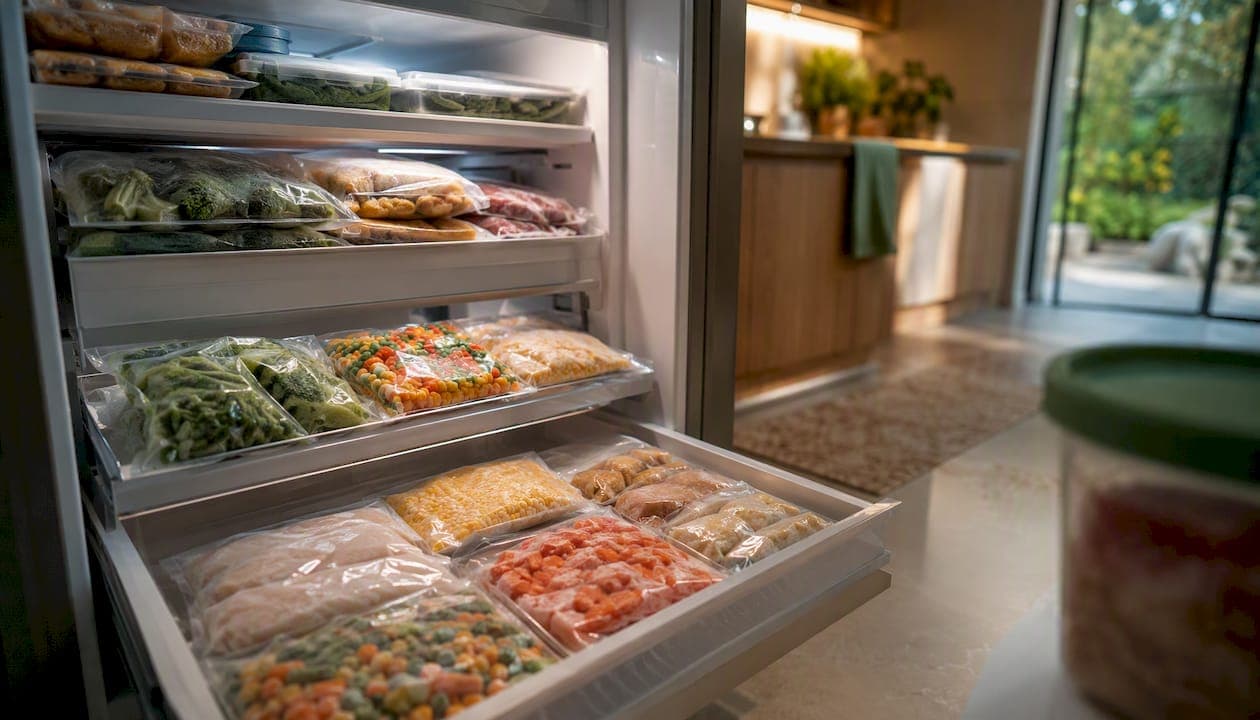
Frozen food kept continuously at −18°C (0°F) is safe to eat indefinitely. Every storage time you see on packaging or in guides is a quality recommendation, not a safety deadline. That single distinction matters more than any other rule in this guide.
Two actions protect both safety and quality from day one:
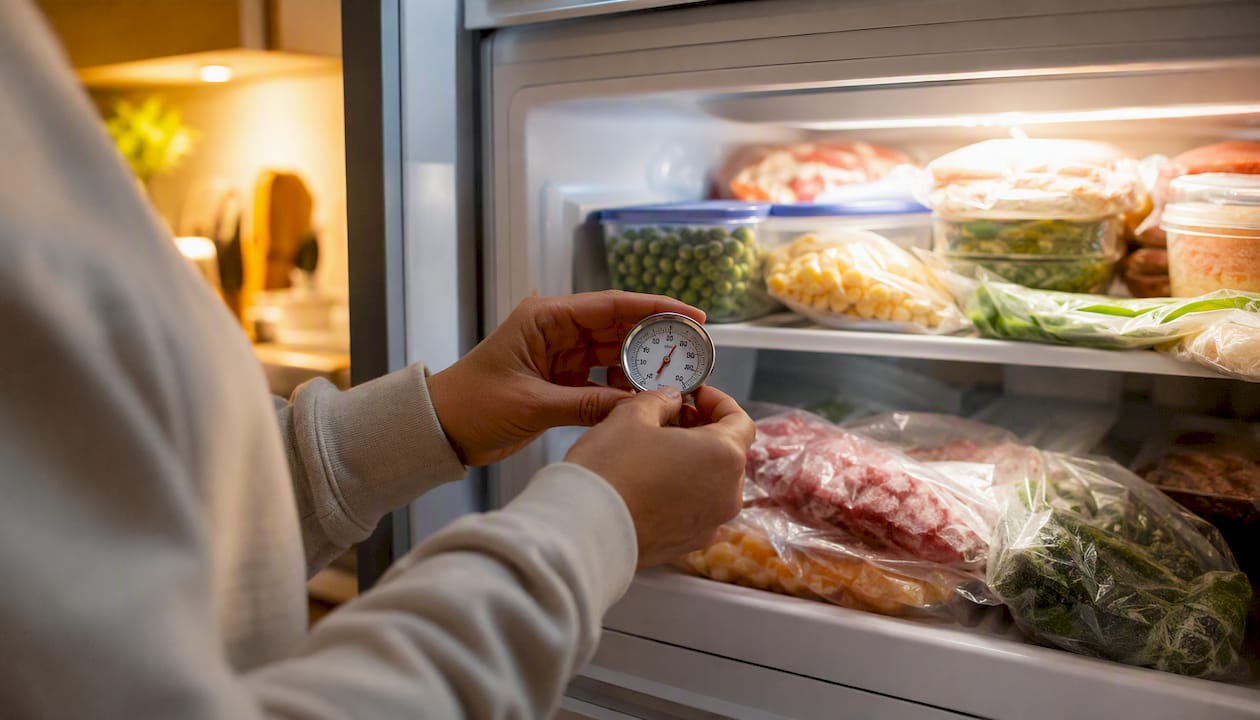
- Check your freezer temperature and keep it at −18°C or colder. A fridge thermometer placed in the freezer confirms this in minutes.
- Label every item with its contents and the date it went in, then rotate older items to the front (first in, first out).
If something has partially thawed and been left at room temperature, discard it. If it thawed in the fridge and stayed cold throughout, it can usually be cooked or refrozen safely, though quality may dip.
Table of Contents
- How long does frozen food last? A storage chart by food type
- What affects how long your frozen food keeps?
- How to freeze food for best quality
- Do frozen foods lose nutrients compared with fresh?
- Key takeaways
- Grovefoods: frozen Brazilian quality, delivered across the UK
How long does frozen food last? A storage chart by food type
The table below lists recommended maximum storage times for quality, assuming a constant −18°C and proper packaging. Food stored beyond these windows is not necessarily unsafe, but texture, flavour, and colour will have declined noticeably.
| Food category | Maximum storage time (quality) |
|---|---|
| Vegetables (blanched) | 8–12 months |
| Fruit | 8–12 months |
| Poultry (whole or pieces) | 6 months |
| Beef/lamb steaks and roasts | 6–12 months |
| Ground/minced meat | 3–4 months |
| Lean fish (cod, haddock) | 6 months |
| Fatty fish (salmon, mackerel) | 2–3 months |
| Shellfish | 3–6 months |
| Cooked meals and leftovers | 2–3 months |
| Bread and baked goods | 3–6 months |
| Hard cheese (grated or sliced) | 6 months |
| Ice cream | 2–4 months |
| Ready meals (shop-bought) | Follow pack date; typically 1–3 months |
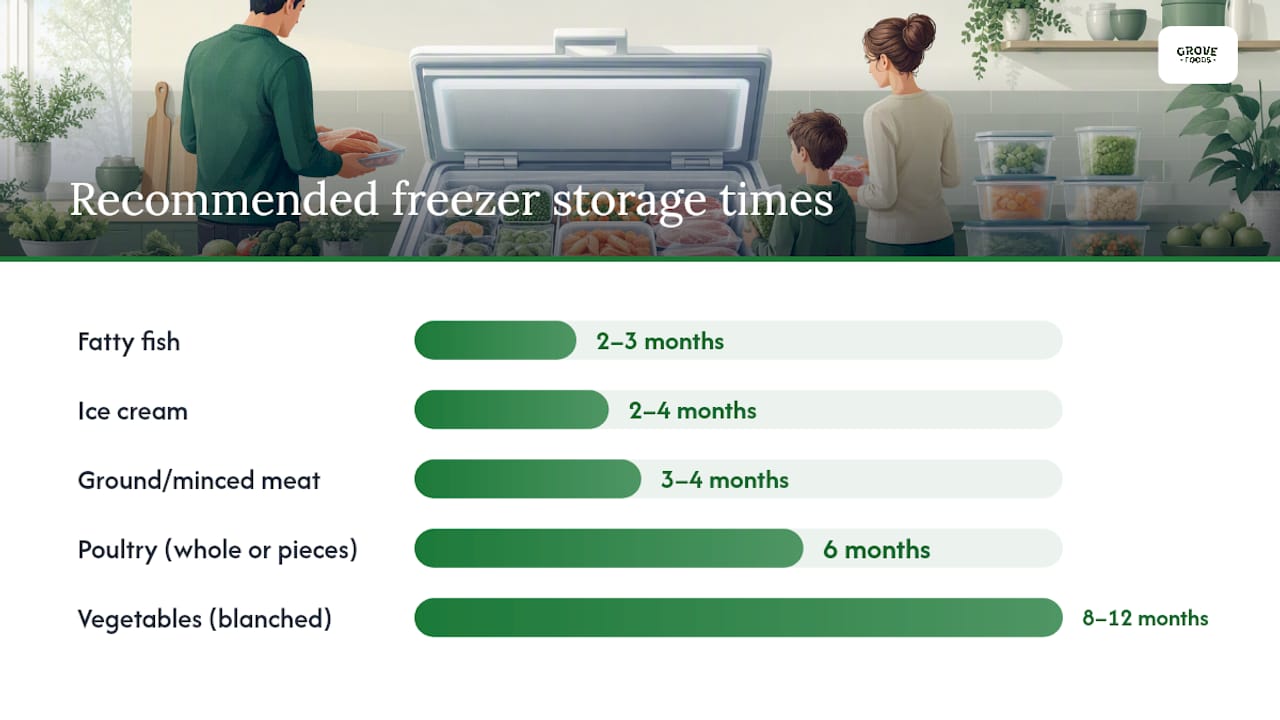
Sources: FoodSafety.gov, NCHFP, NSF.
A few notes worth flagging:
- Fatty fish such as salmon and mackerel tend to go rancid faster than lean white fish because their oils oxidise even at freezer temperatures.
- Vegetables that are not blanched deteriorate significantly faster than properly blanched ones stored in the freezer.
- Bread keeps well in the freezer but stales quickly once thawed, so freezing in individual portions rather than whole loaves is advisable.
- Ice cream may develop ice crystals and lose its smooth texture after extended time in the freezer, even when sealed.
The Food Standards Agency (FSA) and safefood both advise following manufacturer guidance on frozen ready meals and checking that your freezer maintains the correct star rating for long-term storage.
What affects how long your frozen food keeps?
Temperature stability is the single biggest variable. A freezer that holds a steady −18°C preserves quality far longer than one that fluctuates by even a few degrees during defrost cycles or frequent door opening. Every time the temperature rises, ice crystals in the food grow larger, damaging cell walls and worsening texture on thawing.
Packaging is the second major factor. Moisture-vapour resistant materials, including freezer-grade bags, rigid plastic containers, and heavy-duty aluminium foil, slow the dehydration that causes freezer burn. Standard sandwich bags and thin cling film are not designed for the freezer environment and allow moisture to escape within weeks. Removing as much air as possible before sealing reduces oxidation and the formation of large ice crystals that damage texture.
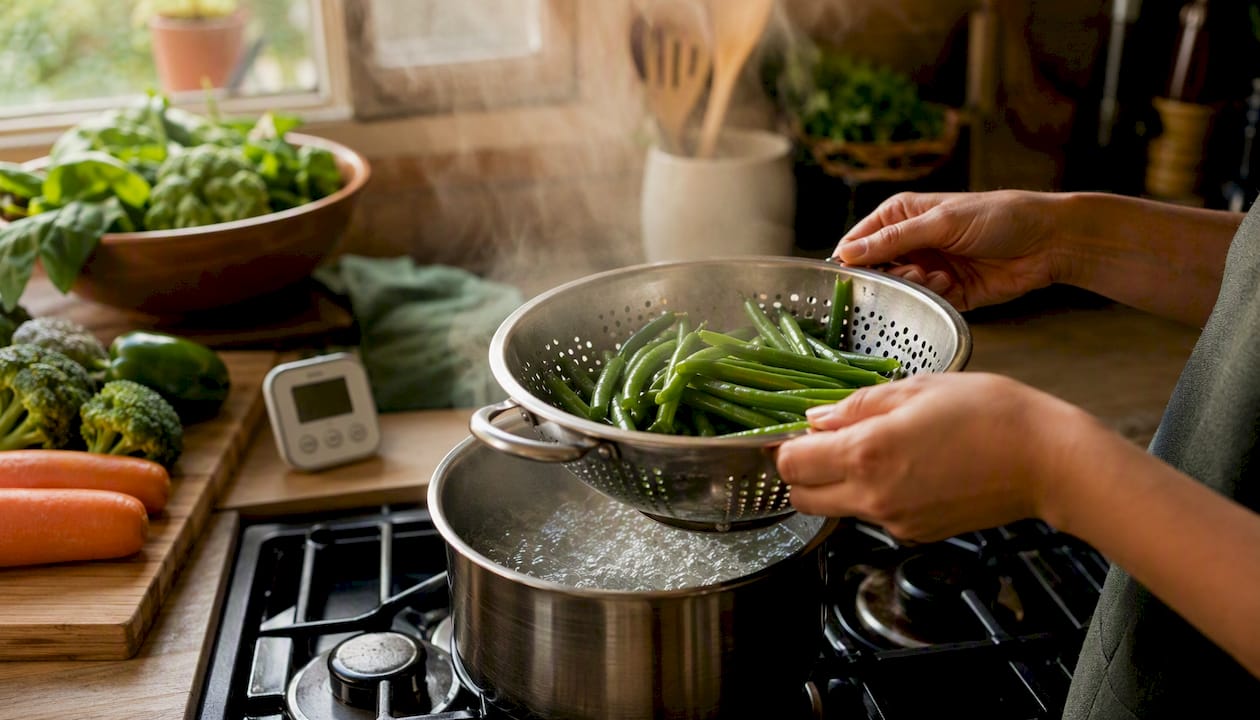
Blanching vegetables before freezing is not optional if you want anything close to the 8–12 month quality window. Blanching inactivates the enzymes that continue breaking down flavour, colour, and texture even at freezer temperatures. The trade-off is a small loss of water-soluble vitamins during the blanching water, but the overall nutrient retention across months of frozen storage is far better than skipping the step.
Food composition matters too. High-fat foods, including oily fish, minced lamb, and cream-based sauces, are more prone to rancidity because fats oxidise even when frozen. Water-rich foods such as cucumber, lettuce, and soft tomatoes suffer severe texture loss on thawing and are generally not worth freezing at all.
Freezer type plays a quieter role. Chest freezers maintain temperature more consistently than upright models because cold air does not spill out when the lid opens. Frost-free uprights run automatic defrost cycles that briefly raise the internal temperature, which can accelerate quality loss in foods stored near the top. If you use a frost-free model, keep long-term items towards the bottom and back.
Pro Tip: Place a freezer thermometer at the centre of your freezer and check it weekly. Many domestic freezers run warmer than their dial suggests, particularly if the door seal has worn.
How to freeze food for best quality
Getting the process right before the food goes in is where most quality is won or lost.
- Cool food completely before freezing. Hot food raises the freezer temperature and promotes large ice crystal formation in surrounding items.
- Divide into portions you will realistically use in one go. Refreezing thawed food degrades quality, so smaller portions give you more flexibility.
- Remove as much air as possible. Press freezer bags flat, use a vacuum sealer if you have one, or press cling film directly against the food surface inside a rigid container.
- Seal tightly with freezer-grade bags, rigid lidded containers, or double-wrapped aluminium foil. Label with the food name, freeze date, and portion size before the item goes in, not after.
- Freeze flat. Thin, flat packs freeze faster, which means smaller ice crystals and better texture. Stack them once solid.
- Place new items at the back or bottom so older stock stays accessible at the front.
A useful label template: Chicken thighs | Frozen: 14 March 2026 | 4 portions | Use by: September 2026.
For vegetables, blanching times vary by type:
- Broccoli and cauliflower florets: 3 minutes
- Sliced courgette: 1–2 minutes
- Spinach and leafy greens: 2 minutes
- Green beans: 3 minutes
- Peas: 1–2 minutes
Plunge blanched vegetables immediately into ice water to stop cooking, drain thoroughly, and pat dry before packing. Excess moisture becomes ice crystals. Soft fruits such as strawberries and raspberries do not need blanching; spread them on a tray to freeze individually before bagging (flash-freezing) so they do not clump.
Do frozen foods lose nutrients compared with fresh?
The short answer: not significantly, and often frozen produce retains more nutrients than supermarket "fresh" that has spent days in transit or on the shelf. Frozen produce is frequently nutritionally equivalent or superior to fresh produce that has been stored for several days after harvest.
The reason is timing. Produce destined for freezing is typically harvested at peak ripeness and processed within hours. Supermarket fresh produce, by contrast, may have been picked early and spent a week in transit before reaching your kitchen. Vitamin C in spinach, for example, degrades measurably during ambient storage, whereas freezing pauses that oxidation almost entirely.
Blanching does cause a small loss of water-soluble vitamins (B vitamins and vitamin C in particular) into the blanching water. That loss is real but modest, and the enzyme inactivation it provides means the remaining nutrients are preserved far more effectively across months of frozen storage than they would be in unblanched produce left in the freezer.
The UN Food and Agriculture Organization (FAO) notes that freezing is one of the most effective methods of preserving nutritional value in food, provided the cold chain is maintained consistently.
For practical purposes: buying frozen peas, spinach, or broad beans is a nutritionally sound choice, often more so than buying the "fresh" equivalent mid-week when it has been sitting in a chilled display for several days.
What to do after a power cut
Keep the freezer door closed. A full freezer that remains closed will hold a safe temperature for roughly 48 hours; a half-full freezer for around 24 hours. Once power is restored, check the internal temperature. If items still contain ice crystals and feel cold throughout, they are safe to refreeze or cook. If anything has fully thawed and reached room temperature, discard it. The FSA recommends not relying on smell alone after a power cut; temperature is the reliable indicator.
Key takeaways
Frozen food kept at a constant −18°C remains safe indefinitely; every storage time in this guide is a quality guideline, not a safety deadline.
| Point | Details |
|---|---|
| Temperature is everything | Keep your freezer at −18°C and check it with a thermometer; fluctuations shorten quality faster than time does. |
| Label and rotate | Write the food name, freeze date, and portion size on every item; move older stock to the front. |
| Package properly | Use freezer-grade bags or rigid containers; remove air and seal tightly to prevent freezer burn. |
| Know the thaw rules | Fridge-thawed food can be refrozen; room-temperature-thawed food should be discarded. |
| Grovefoods frozen products | Grovefoods supplies frozen açaí and pão de queijo to UK homes and trade buyers with packaging designed for long-term frozen storage. |
The part most freezer guides get wrong
Most advice on frozen food focuses on the storage chart and stops there. The chart is useful, but it creates a false sense that the date on the label is the main variable. It is not. Temperature consistency and packaging quality determine whether food at month three looks and tastes like month one, or like something you would rather not serve.
The other thing that gets underplayed: frozen food is not a compromise. For anyone buying Brazilian açaí or pão de queijo in the UK, frozen is the only format that delivers the product at anything close to its original quality. Fresh açaí does not travel. The freezing happens at source, at peak quality, and the cold chain does the rest. That is not a workaround; it is the correct supply model for this category of food.
What I find most interesting, working with frozen Brazilian products, is how often buyers are surprised that frozen açaí retains its nutritional profile so effectively. The flash-freezing process locks in the antioxidants and healthy fats that make açaí worth buying in the first place. A product that has been sitting in ambient storage for days cannot make the same claim.
Grovefoods: frozen Brazilian quality, delivered across the UK
If you are stocking a café, restaurant, or hotel kitchen and need a reliable source of frozen açaí or pão de queijo, Grovefoods supplies both directly from Brazil, with packaging built for long-term frozen storage and a cold-chain delivery model that protects quality from warehouse to your freezer.
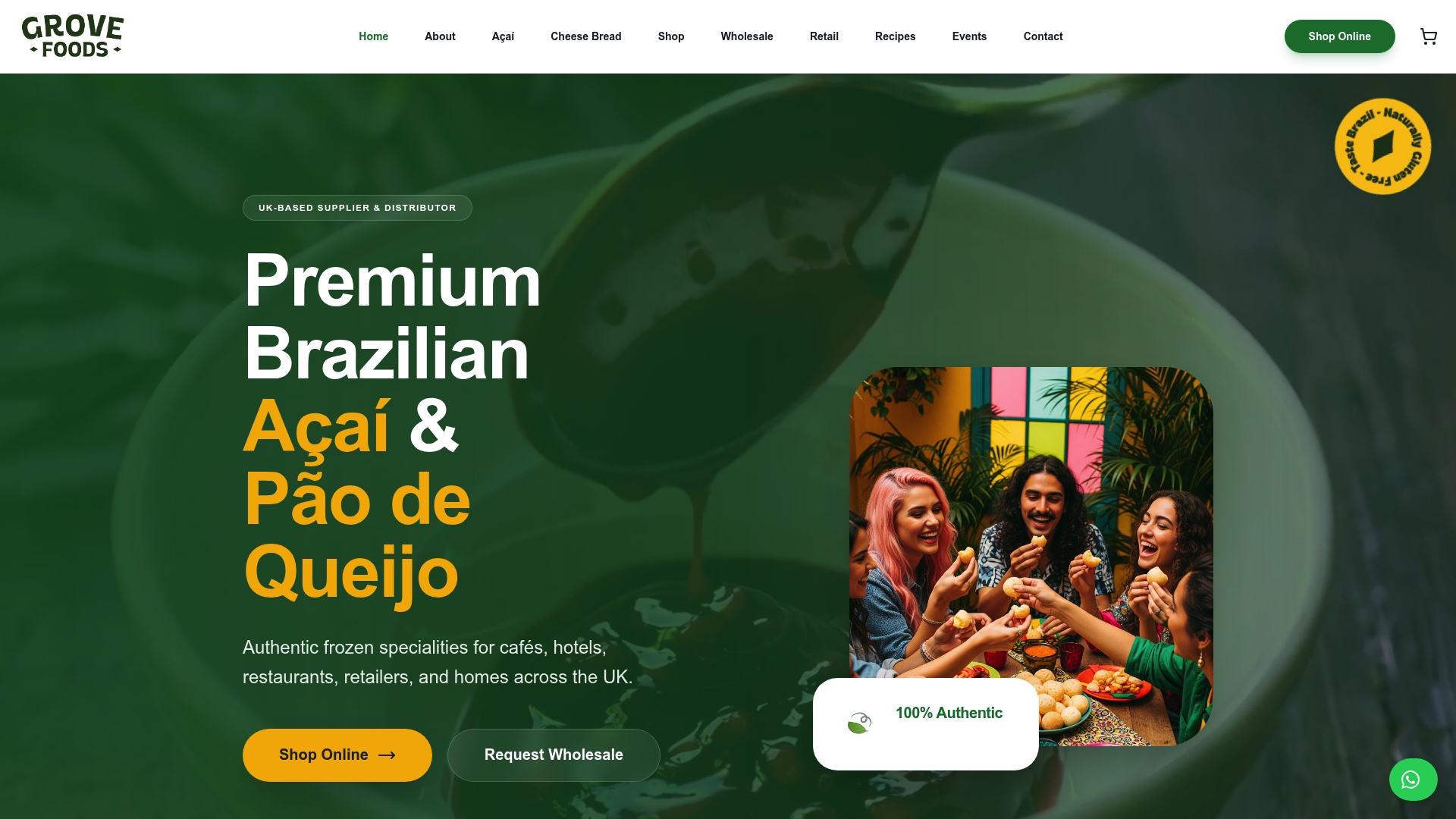
Both products are naturally gluten-free and carry Halal and Kosher certification, which simplifies menu labelling for caterers serving mixed dietary requirements. The açaí arrives ready to blend; the pão de queijo bakes from frozen in minutes. No prep complexity, no waste from short ambient shelf life.
Trade buyers can explore wholesale and foodservice pricing directly, and home buyers can order through the online shop. For retailers looking to add Brazilian frozen specialties to their range, the retail supply page covers product formats, minimum orders, and trade terms.
Useful sources and further reading
- Cold Food Storage Chart | FoodSafety.gov
- How Long Can I Store Frozen Foods - National Center for Home Food Preservation
- Cold and Frozen Food Storage | NSF
- Frozen, fresh or canned food: What’s more nutritious? | BBC
- Fresh vs frozen vs canned vegetables | Examine.com
- Frozen Food Storage Guide: How Long Can You Freeze Foods For? | The Old Farmer's Almanac
- Grove Foods Ltd | Brazilian Açaí & Pão de Queijo Supplier UK